



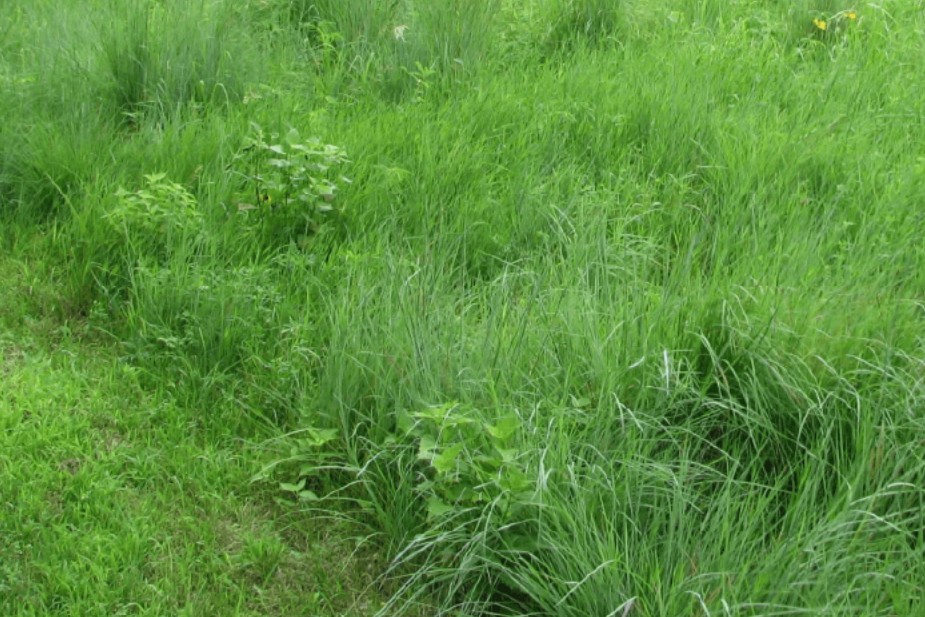
Woodland Edge South & West Native Seed
Built for Partially Shaded Roadsides and Transitional Landscapes
Woodland Edge South & West is designed for the hard line where forest meets field, pavement meets grassland, and shade competes with open sky. These edge environments punish generic mixes, shifting light, uneven moisture, and competing vegetation expose weaknesses fast. This blend is built to handle that tension, delivering native structure, seasonal strength, and long-term stability where conditions refuse to stay consistent.
Instead of forcing prairie species into shade or woodland plants into sun, this mix balances both worlds. Native grasses establish backbone and height, forbs add diversity and seasonal expression, and a temporary cover crop locks soil early so the system has time to mature. The result is a durable, visually unified planting that holds ground, manages erosion, and transitions naturally with surrounding landscapes.
A System Built for Edges That Refuse to Behave
Edge zones demand more than quick green-up. They require vegetation that can tolerate filtered light, compete against invasive pressure, and maintain structure as conditions change year after year. Woodland Edge South & West was built with that reality in mind.
This mix delivers performance where transition zones usually fail:
- Native warm and cool season grasses create layered structure that stabilizes soil while adapting to partial shade and sun exposure
- Broadleaf forbs bring pollinator support, visual diversity, and seasonal balance without overpowering the stand
- Early cover crop oats provide immediate soil protection, limit erosion, and nurse native seedlings through establishment
- Deep and fibrous root systems reinforce slopes, shoulders, and reclaimed soils under storm cycles and freeze thaw pressure
- Species diversity strengthens resilience so the stand holds together instead of thinning or fragmenting over time
Designed for Native Infrastructure and Reclamation
Woodland Edge South & West excels where projects demand ecological alignment without sacrificing performance. It is well suited for:
- Native roadside corridors and MnDOT reclamation projects
- Woodland edges, savanna transitions, and partially shaded embankments
- Rights of way bordering forested or brush dominated areas
- Reclamation sites requiring native compliance and long-term stability
This blend is approved for use across Tallgrass Aspen Parklands, Prairie Parkland, and Eastern Broadleaf Forest Provinces, including MnDOT Districts 2 west, 3B, 4, Metro, 6, 7, and 8.
Replaces BWSR U7
|
36-211 |
Woodland Edge South & West |
|
|
|
|
|
Common Name |
Scientific Name |
Rate (kg/ha) |
Rate (lb/ac) |
% of Mix (% by wt) |
Seeds/ sq ft |
|
big bluestem |
Andropogon gerardii |
1.12 |
1.00 |
2.90% |
3.68 |
|
side-oats grama |
Bouteloua curtipendula |
1.12 |
1.00 |
2.89% |
2.20 |
|
kalm’s brome |
Bromus kalmii |
1.68 |
1.50 |
4.34% |
4.40 |
|
nodding wild rye |
Elymus canadensis |
1.40 |
1.25 |
3.61% |
2.38 |
|
bottlebrush grass |
Elymus hystrix |
0.36 |
0.32 |
0.91% |
0.88 |
|
slender wheatgrass |
Elymus trachycaulus |
1.40 |
1.25 |
3.64% |
3.18 |
|
switchgrass |
Panicum virgatum |
0.07 |
0.06 |
0.17% |
0.30 |
|
little bluestem |
Schizachyrium scoparium |
0.69 |
0.62 |
1.79% |
3.40 |
|
Indian grass |
Sorghastrum nutans |
1.12 |
1.00 |
2.89% |
4.40 |
|
|
Total Grasses |
8.97 |
8.00 |
23.14% |
24.82 |
|
common yarrow |
Achillea millefolium |
0.03 |
0.03 |
0.09% |
2.00 |
|
blue giant hyssop |
Agastache foeniculum |
0.11 |
0.10 |
0.28% |
3.20 |
|
white snakeroot |
Ageratina altissima |
0.03 |
0.03 |
0.09% |
1.70 |
|
white prairie clover |
Dalea candida |
0.19 |
0.17 |
0.50% |
1.20 |
|
Canada tick trefoil |
Desmodium canadense |
0.16 |
0.14 |
0.42% |
0.29 |
|
ox-eye |
Heliopsis helianthoides |
0.15 |
0.13 |
0.38% |
0.30 |
|
wild bergamot |
Monarda fistulosa |
0.07 |
0.06 |
0.18% |
1.60 |
|
stiff goldenrod |
Oligoneuron rigidum |
0.07 |
0.06 |
0.17% |
0.90 |
|
Clayton’s sweet cicely |
Osmorhiza claytonii |
0.07 |
0.06 |
0.17% |
0.06 |
|
smooth wild rose |
Rosa blanda |
0.07 |
0.06 |
0.17% |
0.06 |
|
black-eyed susan |
Rudbeckia hirta |
0.20 |
0.18 |
0.52% |
6.10 |
|
Lance-leaved Figwort |
Scrophularia lanceolata |
0.06 |
0.05 |
0.14% |
3.20 |
|
zigzag goldenrod |
Solidago flexicaulis |
0.02 |
0.02 |
0.05% |
0.50 |
|
showy goldenrod |
Solidago speciosa |
0.07 |
0.06 |
0.18% |
1.80 |
|
smooth aster |
Symphyotrichum laeve |
0.07 |
0.06 |
0.19% |
1.30 |
|
American vetch |
Vicia americana |
0.20 |
0.18 |
0.52% |
0.14 |
|
golden alexanders |
Zizia aurea |
0.12 |
0.11 |
0.33% |
0.46 |
|
|
Total Forbs |
1.68 |
1.50 |
4.38% |
24.80 |
|
Oats |
Avena sativa |
28.02 |
25.00 |
72.48% |
11.14 |
|
|
Total Cover Crop |
28.02 |
25.00 |
72.48% |
11.14 |
|
|
Totals: |
38.67 |
34.50 |
100.00% |
60.75 |
|
Purpose: |
Partly shaded grassland planting for native roadsides, reclamation, etc. |
||||
|
Planting Area: |
Tallgrass Aspen Parklands, Prairie Parkland, and Eastern Broadleaf Forest Provinces. Mn/DOT Districts 2(west), 3B, 4, Metro, 6, 7 & 8. |
||||
36-211  | MANUFACTURED BY: Ramy Turf
Establishment That Gives the Stand Its Advantage
Success at the edge starts with giving every species room to do its job. Placement into firm, prepared seedbeds allows the cover crop to secure soil quickly while native grasses and forbs establish at their own pace. Broadcast or drill seeding both perform well when seed-to-soil contact is consistent and early moisture is managed.
As the oats fade, native species step forward. Roots deepen, canopy structure fills in, and the stand begins functioning as a self-supporting system instead of a temporary planting.
Edge Performance That Holds Its Ground
Once established, Woodland Edge South & West stops behaving like a problem area and starts working like infrastructure. Soil stays in place. Vegetation remains continuous. Transitions look intentional instead of accidental.
Contractors gain confidence that edge zones will not unravel after closeout. Engineers see stable grades and compliant native cover across long corridors. Agencies and landowners benefit from landscapes that mature naturally without repeated intervention.
Manufactured by Ramy Turf, Woodland Edge South & West reflects practical field experience, native expertise, and an understanding that edges are where projects are most often judged. When the goal is native stability that looks right and performs long after installation, this blend delivers strength from the boundary outward.