



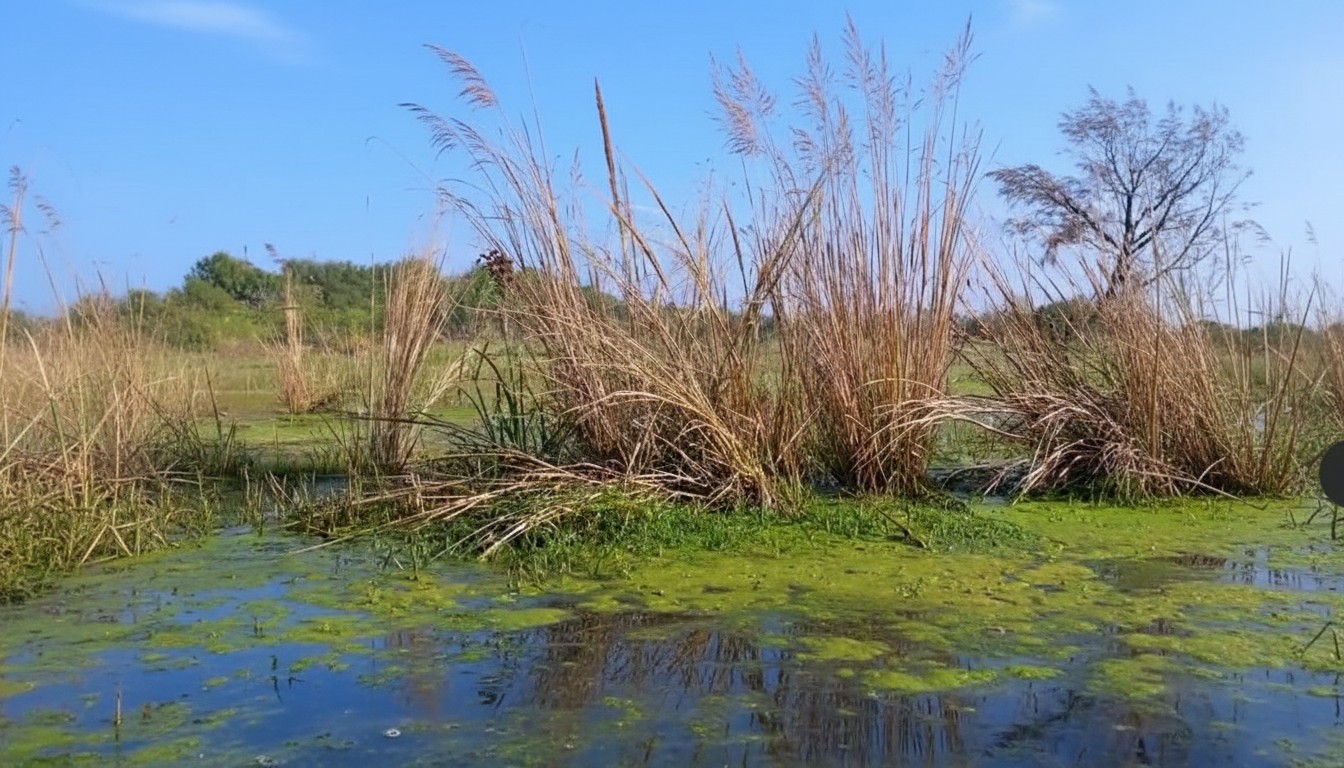
Wet Meadow and Native Grass Seed for Long-Term Growth
Replaces BWSR W2
|
34-271 |
Wet Meadow South & West |
|
|
|
|
|
Common Name |
Scientific Name |
Rate (kg/ha) |
Rate (lb/ac) |
% of Mix (% by wt) |
Seeds/ sq ft |
|
fringed brome |
Bromus ciliatus |
1.23 |
1.10 |
9.18% |
4.45 |
|
bluejoint |
Calamagrostis canadensis |
0.06 |
0.05 |
0.41% |
5.00 |
|
Virginia wild rye |
Elymus virginicus |
1.12 |
1.00 |
8.37% |
1.55 |
|
rice cut grass |
Leersia oryzoides |
0.28 |
0.25 |
2.07% |
3.10 |
|
tall manna grass |
Glyceria grandis |
0.17 |
0.15 |
1.26% |
3.90 |
|
fowl manna grass |
Glyceria striata |
0.11 |
0.10 |
0.83% |
3.30 |
|
fowl bluegrass |
Poa palustris |
0.39 |
0.35 |
2.88% |
16.50 |
|
|
Total Grasses |
3.36 |
3.00 |
25.00% |
37.80 |
|
bristly sedge |
Carex comosa |
0.24 |
0.21 |
1.78% |
2.36 |
|
pointed broom sedge |
Carex scoparia |
0.06 |
0.05 |
0.43% |
1.60 |
|
awl-fruited sedge |
Carex stipata |
0.19 |
0.17 |
1.40% |
2.10 |
|
tussock sedge |
Carex stricta |
0.03 |
0.03 |
0.21% |
0.50 |
|
fox sedge |
Carex vulpinoidea |
0.16 |
0.14 |
1.13% |
5.00 |
|
path rush |
Juncus tenuis |
0.04 |
0.04 |
0.34% |
15.00 |
|
dark green bulrush |
Scirpus atrovirens |
0.20 |
0.18 |
1.48% |
30.00 |
|
woolgrass |
Scirpus cyperinus |
0.09 |
0.08 |
0.67% |
50.00 |
|
|
Total Sedges and Rushes |
1.01 |
0.90 |
7.44% |
106.56 |
|
marsh milkweed |
Asclepias incarnata |
0.27 |
0.24 |
2.03% |
0.43 |
|
common boneset |
Eupatorium perfoliatum |
0.02 |
0.02 |
0.18% |
1.30 |
|
grass-leaved goldenrod |
Euthamia graminifolia |
0.01 |
0.01 |
0.06% |
1.00 |
|
spotted Joe pye weed |
Eutrochium maculatum |
0.02 |
0.02 |
0.18% |
0.75 |
|
autumn sneezeweed |
Helenium autumnale |
0.03 |
0.03 |
0.23% |
1.30 |
|
sawtooth sunflower |
Helianthus grosseserratus |
0.04 |
0.04 |
0.30% |
0.20 |
|
great lobelia |
Lobelia siphilitica |
0.02 |
0.02 |
0.13% |
2.90 |
|
blue monkey flower |
Mimulus ringens |
0.01 |
0.01 |
0.07% |
6.80 |
|
Virginia mountain mint |
Pycnanthemum virginianum |
0.07 |
0.06 |
0.53% |
5.10 |
|
giant goldenrod |
Solidago gigantea |
0.02 |
0.02 |
0.14% |
1.50 |
|
eastern panicled aster |
Symphyotrichum lanceolatum |
0.03 |
0.03 |
0.22% |
1.50 |
|
red-stemmed aster |
Symphyotrichum puniceum |
0.19 |
0.17 |
1.42% |
5.00 |
|
tall meadow-rue |
Thalictrum dasycarpum |
0.01 |
0.01 |
0.12% |
0.11 |
|
blue vervain |
Verbena hastata |
0.15 |
0.13 |
1.12% |
4.61 |
|
bunched ironweed |
Vernonia fasciculata |
0.03 |
0.03 |
0.28% |
0.30 |
|
Culver’s root |
Veronicastrum virginicum |
0.01 |
0.01 |
0.12% |
4.20 |
|
golden alexanders |
Zizia aurea |
0.28 |
0.25 |
2.06% |
1.00 |
|
|
Total Forbs |
1.23 |
1.10 |
9.19% |
38.00 |
|
Oats |
Avena sativa |
7.85 |
7.00 |
58.37% |
3.12 |
|
|
Total Cover Crop |
7.85 |
7.00 |
58.37% |
3.12 |
|
|
Totals: |
13.45 |
12.00 |
100.00% |
185.48 |
|
Purpose: |
Wet meadow / Sedge meadow reconstruction for wetland mitigation or ecological restoration projects |
||||
|
Planting Area: |
Tallgrass Aspen Parklands, Prairie Parkland, and Eastern Broadleaf Forest Provinces. Mn/DOT Districts 2(west), 3B, 4, Metro, 6, 7 & 8. |
||||
34-271  | MANUFACTURED BY: Ramy Turf
Thrives in Moist and Seasonally Saturated Landscapes
Ramy Turf’s 34-271 Wet Meadow South and West transforms low-lying, hydric, and seasonally saturated sites into vibrant, ecologically functional meadows that combine beauty, stability, and long-term performance. Designed for naturalized areas, ecological restorations, and drainage-prone zones, this blend delivers rapid coverage, deep-rooted resilience, and enduring soil stability. Each species contributes to a dense vegetative canopy that locks soil, resists runoff, and maintains a balanced interface between land and water, ensuring both functional and aesthetic success across challenging wet environments.
High-Performance Native Composition
Every element of the blend is engineered to perform under pressure, balancing species that surge to cover exposed soils with persistent perennials that anchor the ground and filter runoff. The result is a wet meadow capable of surviving heavy rainfall, seasonal flooding, and moderate foot traffic while supporting habitat diversity and long-term ecological succession. Over time, 34-271 enriches soil, stabilizes hydric zones, and enhances wildlife corridors, all while maintaining an attractive, textured appearance.
Key Benefits and Specifications
Ramy Turf’s 34-271 Wet Meadow South and West delivers measurable results for contractors, engineers, and land managers who demand both reliability and performance:
- Rapid Establishment and Immediate Coverage – Fast-germinating species form a protective mat that limits erosion, holds topsoil in place, and creates visually consistent coverage from day one.
- Deep-Rooted Soil Stability – Perennial roots penetrate into the soil profile to anchor banks, improve water infiltration, and sustain structural integrity through variable moisture cycles.
- Resilient Stand Development – Dense vegetation withstands seasonal growth, moderate traffic, and mowing without thinning, patching, or collapse.
- Enhanced Habitat and Biodiversity – Native species support pollinators, small wildlife, and invertebrates while encouraging long-term ecological succession.
- Visual and Functional Appeal – Produces a lush, textured canopy that remains attractive while fulfilling operational and restoration requirements.
- Adaptable Across Wet and Saturated Zones – Performs reliably in low-lying meadows, roadside ditches, drainage channels, and restoration sites prone to standing water or runoff.
- Low Long-Term Maintenance – Once established, the stand reinforces soil, limits erosion, and continues to thrive with minimal intervention.
Planting for Maximum Impact
Proper installation unlocks the full potential of 34-271 Wet Meadow South and West. Seeds should be placed into moist, prepared soils to ensure consistent contact and vigorous emergence, establishing a strong, uniform cover across slopes, channels, and low-lying areas. Light incorporation during drill or broadcast seeding secures the seed while temporary erosion blankets, mulching, or controlled water management can accelerate establishment in high-risk washout zones. Every seed contributes to a stand that holds, recovers, and strengthens over time, turning vulnerable landscapes into resilient, self-sustaining meadows.
Sustained Performance Season After Season
Once established, 34-271 creates a robust, self-reinforcing canopy that maintains soil stability, minimizes sediment loss, and supports long-term ecological function. Vegetation continues to thrive through wet-dry cycles, foot traffic, and seasonal extremes, providing both functional and aesthetic value. Engineers, land managers, and investors benefit from reduced rework, protected infrastructure, and landscapes that perform reliably while enhancing ecological health. With Ramy Turf’s 34-271 Wet Meadow South and West, every project achieves measurable, long-lasting results from initial installation through full meadow maturity.