



Bee-Friendly Lawn Seed for Functional Pollinator Habitat
Functional Turf. Practical Pollinator Value. Built for Minnesota.
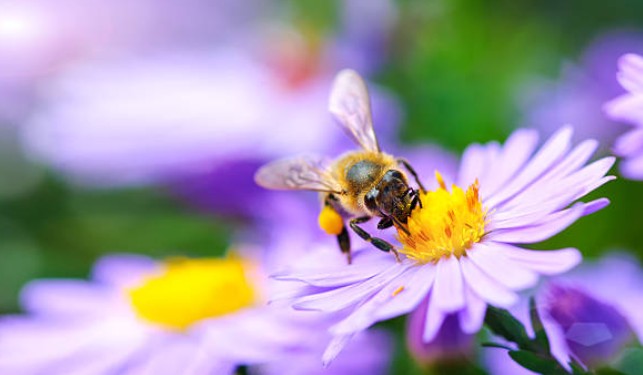
RTP Bee Lawn from Ramy Turf Products is a cost-effective seed mixture for establishing new lawns and overseeding existing turf. It combines four low-maintenance fine fescues with Dutch white clover to create a mowable lawn that also provides flowering forage for bees and other beneficial pollinators.
The fine fescue foundation delivers the texture, coverage and adaptability expected from functional turf. Dutch white clover introduces low-growing flowers without turning the site into a meadow or fundamentally changing how the lawn is used.
Designed with practical pollinator value in mind, the mixture is drought and shade tolerant once established. Under favorable soil, temperature and watering conditions, germination may begin in as little as four days. Actual establishment time will vary by site and season.
Composition by Weight:
- 25% Chewings fescue
- 25% creeping red fescue
- 20% hard fescue
- 20% sheep fescue
- 10% Dutch white clover
Recommended Seeding Rates:
- New seeding: 5–6 lbs per 1,000 sq. ft.
- New seeding by acreage: approximately 220–260 lbs per acre
- Overseeding: 3–4 lbs per 1,000 sq. ft.
MANUFACTURED BY: Ramy Turf Products
A Bee Lawn That Still Functions Like a Lawn
Pollinator-supporting landscapes do not have to look unmanaged or require property owners to give up the practical benefits of turf. RTP Bee Lawn maintains the familiar appearance and usability of a lawn while introducing flowering coverage that provides meaningful pollinator value.
The fine fescues create a soft, fine-textured turf surface with good adaptability to shade and periods of reduced moisture. Dutch white clover grows within the turf canopy and produces flowers that provide a food source for pollinators during the growing season.
- Supports bees and other beneficial pollinators when clover is flowering
- Creates a mowable, functional lawn rather than a meadow-style planting
- Suitable for establishing new lawns or overseeding compatible existing turf
- Uses fine fescues selected for low-maintenance lawn applications
- Provides improved shade and drought tolerance once established
- Requires less intensive fertility than many conventional turf programs
Designed for Minnesota Landscapes
RTP Bee Lawn is developed for residential, commercial, institutional and public landscapes in Minnesota and the Upper Midwest. It is particularly useful where the objective is to maintain a recognizable lawn while adding practical habitat value.
Potential applications include:
- Residential lawns
- Commercial and institutional properties
- Municipal grounds and public spaces
- Parks and recreational landscapes
- Campus and healthcare properties
- Transition areas where conventional turf remains desirable
Establishment and Seeding
Prepare the planting area to provide clean, firm soil and good seed-to-soil contact. Apply the mixture evenly at the recommended rate and lightly incorporate the seed where appropriate. Avoid burying the seed too deeply.
For new lawns, apply 5–6 pounds per 1,000 square feet. For overseeding, apply 3–4 pounds per 1,000 square feet after mowing the existing turf short and opening the canopy so the seed can reach the soil.
Maintain consistent moisture during germination and early establishment. Watering frequency should be adjusted for temperature, rainfall, soil conditions and site exposure.
Recommended Planting Windows
- Spring seeding: Mid to late May
- Dormant seeding: Late October to early November
Weather and soil conditions vary from year to year. Contact Ramy Turf before installation to confirm current timing and site-specific recommendations.
Low-Maintenance Turf Management
RTP Bee Lawn is intended for a low-maintenance lawn program. After establishment, the turf should be managed to preserve both the fine fescue foundation and the flowering clover component.
- Maintenance level: Low
- Establishment water: Approximately 0.5–1 inch per week, adjusted for rainfall and site conditions
- Suggested mowing height: 3 inches or higher
- Fertilization: Minimal applications recommended
Avoid excessive nitrogen because aggressive fertility programs can reduce the presence of clover. Mowing height and frequency also influence flowering. Allowing the clover to bloom between mowing cycles extends the period during which forage is available to pollinators.
Quality-Controlled Seed from Ramy Turf
RTP Bee Lawn is blended at Ramy Turf Products’ MCIA-approved seed blending facility. Ramy Turf is licensed to mix, bag and distribute seed mixtures for federal, state, municipal and private projects.
- Seed is labeled and packaged in accordance with the Federal Seed Act and applicable state seed laws
- Germination testing follows applicable AOSA/ISTA laboratory standards
- Seed test dates are confirmed within applicable testing periods
- Lot numbers are maintained across product tags, analysis reports and shipping records
- Lot-specific seed analysis and certification documentation are available upon request
- Certified-class cultivars are used where available
Like-or-better cultivars may be substituted based on availability and market conditions. Current substitution documentation and supporting records are available upon request.
Plan the Lawn Around the Site
The planning phase is the best time to involve a Ramy Turf representative. Site use, sunlight, soil conditions, planting season, irrigation and long-term maintenance expectations all influence whether RTP Bee Lawn is the right solution.
Contact Ramy Turf Products to evaluate the site, confirm the current formulation and determine the appropriate seeding and establishment approach for your project.