



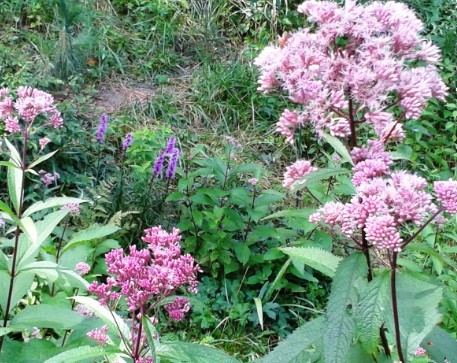
Wildflower Seed Built for Moist and Wet Landscapes
Wetland Wildflowers Built for Stormy Stability
Wet Forbs Native Wildflowers transforms saturated ground, low-lying corridors, and moisture-heavy landscapes into living systems that hold soil, manage water, and deliver powerful visual impact. Designed for sites where standing moisture, seasonal flooding, and runoff pressure challenge traditional plantings, this mix establishes wildflowers that thrive where water dictates the rules.
Instead of fighting wet conditions, these native forbs lean into them. Roots anchor into soft soils, foliage spreads across exposed surfaces, and blooms rise above fluctuating water levels to create landscapes that look intentional, stable, and alive. The result is not decoration, but infrastructure made of vegetation.
Built for Water, Grounded in Performance
Moist and wet sites demand plants that can tolerate saturation without collapse or washout. Wet Forbs Native Wildflowers is structured to deliver early coverage, long-term persistence, and soil reinforcement where erosion pressure never fully disappears.
This mix is engineered to perform when conditions stay unpredictable:
- Fast establishment secures exposed soils quickly, limiting sediment movement during storm events and runoff cycles
- Deep and spreading root systems bind soft ground, stabilize banks, and maintain grade integrity through wet periods
- Native wildflowers maintain structure and color despite fluctuating water levels and seasonal saturation
- Dense canopy coverage suppresses invasive pressure while supporting pollinators and native wildlife
- Natural succession builds soil health and visual depth year after year without replanting
Where Wet Forbs Native Wildflowers Takes Control
Projects succeed when vegetation works with water instead of against it. This mix excels in environments where moisture is constant and performance cannot slip:
- Drainage swales, retention areas, and stormwater corridors
- Wetland buffers, shoreline edges, and flood-prone restoration sites
- Low-lying rights of way and infrastructure zones with persistent moisture
- Naturalized landscapes where erosion control and aesthetics must coexist
Installation That Sets the Site
Strong performance begins with solid placement. Seeds perform best when installed into moist, prepared soils that allow immediate contact and consistent hydration. Broadcast application works well across broad wet areas, while controlled placement helps maintain coverage on slopes and transitional edges. Early moisture supports rapid emergence, after which the stand builds strength naturally through root development and canopy expansion.
Landscapes That Hold Their Ground
Wet Forbs Native Wildflowers does more than survive water. It uses it, soil stays in place. Grades remain defined and vegetation fills gaps instead of retreating. Over time, sites shift from problem zones into stable, functional landscapes that require less intervention and fewer fixes.
Manufactured by Ramy Turf, this mix reflects decades of field experience and a deep understanding of how native vegetation behaves under real moisture pressure. When wet ground needs to perform, not just look planted, this solution delivers confidence from the first rain through every season that follows.